
Turning super into retirement income.
Retirement changes the job your wealth has to do. For decades it was building. Now it has to pay you an income, for 25 to 30 years or more.
Retirement income depends on sequencing as much as returns.
Start with what you need to spend, not with what the portfolio might earn. Hold enough in cash and defensive assets that you are never forced to sell growth assets after a market fall. Decide which assets to draw on first. Keep enough invested for growth that the money lasts.
Know what you need
What you need each year, and how that changes: the active early years, the quieter years after, and the one-off costs such as travel, helping children or a new car.
Decide when
When you stop work, gradually or all at once, shapes everything else. From age 60, super can generally be accessed once you retire or leave a job. From 65 it can be accessed whether or not you are still working.
Set aside the next few years
Hold the income you need for the next few years in cash and defensive assets, so the growth assets can ride out a market fall without being sold at the bottom.
Decide what to draw on first
Super, personal investments, a business or property each play a different role. The order you draw on them affects how long the money lasts, so we plan it with your accountant.
Keep it growing
A retirement that lasts 30 years needs growth as well as income. The rest of the portfolio stays invested for the long term and is reviewed as markets and needs change.
Super, investments and everything else.
Most families retire with wealth in more than one place. A retirement plan brings them together, so that each part does the job it is best suited to.
Super
For many people, moving super into a retirement income stream, such as an account-based pension, is the starting point. Minimum yearly payments apply and rise with age.
Investments outside super
Shares, managed funds and cash held personally or in a trust or company. Often the most flexible source of income, and the first call for large one-off costs.
A business or property
Rent from an investment property, the proceeds of a business sale, or the family home itself. Each has a role, and a timetable, in the plan.
Each source has its own rules, so we work with your accountant on the order and timing of withdrawals.
When it is time for advice.
Many people plan their own retirement well. Families usually bring us in when one of these is true.
Wealth sits in several places
Super, personal investments, a family trust or company, a business or property, each with its own rules and timetable.
A big decision is close
Stopping work, selling or handing on a business, or downsizing the family home.
It has to last, and pass on
An income for the rest of your life, and something left for the next generation.
A retirement plan you can live on.
We are not constrained by any one product, manager or asset class. The plan is built around what you need to spend, and how long it has to last.
A written plan
Prepared for your family, covering structure, asset allocation, timing and how each part is handled. It is personal advice, prepared for your circumstances.
Implementation, done for you
We put the plan in place: accounts, transfers, sales and the portfolio itself.
A broad choice of managers
Access to a wide range of fund managers and asset classes, chosen for your plan rather than for any one product.
Your advisers, coordinated
We work with your accountant and lawyer, so each decision is checked against the whole picture.
Regular reviews
Online access to your portfolio, and a review each year and whenever markets or life change.
We work with your accountant.
Retirement touches super, the accounts and the estate at the same time. Each decision is checked against the whole picture before it is made.
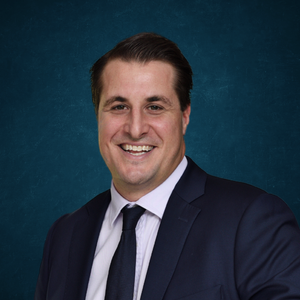
Murdoch Gatti
Founder and Private Wealth Adviser. In financial markets and wealth management since 2006. Master of Commerce (Finance) and Diploma of Financial Services (Financial Planning). Host of The Rate of Change podcast, in conversation with fund managers, economists and business leaders. You work directly with Murdoch.
Authorised Representative No. 001007979 · About York
Your accountant
Looks after your accounts and tax returns. We work with them on the order and timing of withdrawals.
Your lawyer
Keeps your will, powers of attorney and super nominations consistent with the plan.
York
The income plan, the portfolio behind it, and how the pieces fit together.
Planning for retirement.
The questions we are asked most often by families planning to retire, or already retired.
How do I turn my super into an income?
For many people, the starting point is moving super into a retirement income stream, such as an account-based pension, once they retire. From there, the questions are how much to draw, how much to hold in cash, and how the rest of the portfolio is invested. We build the income plan, manage the portfolio behind it, and work with your accountant on the order and timing of withdrawals.
How much do I need to retire?
Start with what you spend, not with a target number. Work out what you need each year, how that changes over time, and the one-off costs you expect. The amount you need follows from that, together with when you stop work and how the portfolio is invested.
When can I access my super?
From age 60, super can generally be accessed once you retire or leave a job. From 65 it can be accessed whether or not you are still working. Your super fund can confirm the position for your own accounts.
How much should I hold in cash in retirement?
Enough that you are never forced to sell growth assets after a market fall. Many retirees hold the income they need for the next few years in cash and defensive assets, and keep the rest invested for growth. The right amount depends on what you spend and what else you own.
What is sequencing risk?
It is the risk of a market fall early in retirement, while withdrawals are being made. Selling assets at low prices to fund income can permanently reduce how long the money lasts. A cash reserve and a clear order of withdrawals are the usual ways to manage it.
Should I pay off debt before I retire?
Often it is part of the plan, because it lowers the income you need. Whether to repay all of it depends on what else the money could do and how much flexibility you want to keep.
Can you manage the investments in our SMSF in retirement?
Yes. We advise on and manage the investments inside your self-managed super fund. Setting up, administering and auditing the fund is handled by our specialist SMSF administration partner, and we work with your accountant.
Do I need a financial adviser for retirement?
Not always. If your needs are simple and your super is in one place, it may be straightforward. Advice adds most when wealth sits across several places, when there is a business or property to plan around, or when you want the money to last and pass to the next generation.
How are your fees set?
Fees are agreed in writing before any work begins. A first conversation is complimentary and carries no obligation. Details are in our Financial Services Guide.
General information only. This page has been prepared without taking into account your objectives, financial situation or needs. Before acting on it, consider whether it is appropriate to you in light of your objectives, financial situation and needs. York does not provide tax advice; we work with your accountant on your own position.
Three steps, at your pace.
There is no obligation at any stage, and no recommendation is made until you engage us in writing.
01 A first conversation
Twenty to thirty minutes, complimentary, to understand your family and whether we are the right fit. A rough picture of what you own is enough.
02 A written plan
If we proceed, we agree the fee in writing first, then prepare a written plan for your family.
03 Put in place, and reviewed
We implement the plan and review it with you each year, and whenever markets or life change.
Start with a conversation.
If you are considering a long-term advisory relationship, the first step is a 20–30 minute conversation to understand whether we are the right fit for you and your family.
Three short questions. An adviser will be in touch shortly after.
Which best describes you?
What would you like help with?
How should we reach you?
Leave your name, email and phone number and an adviser will contact you shortly to arrange a time.
Enter your details